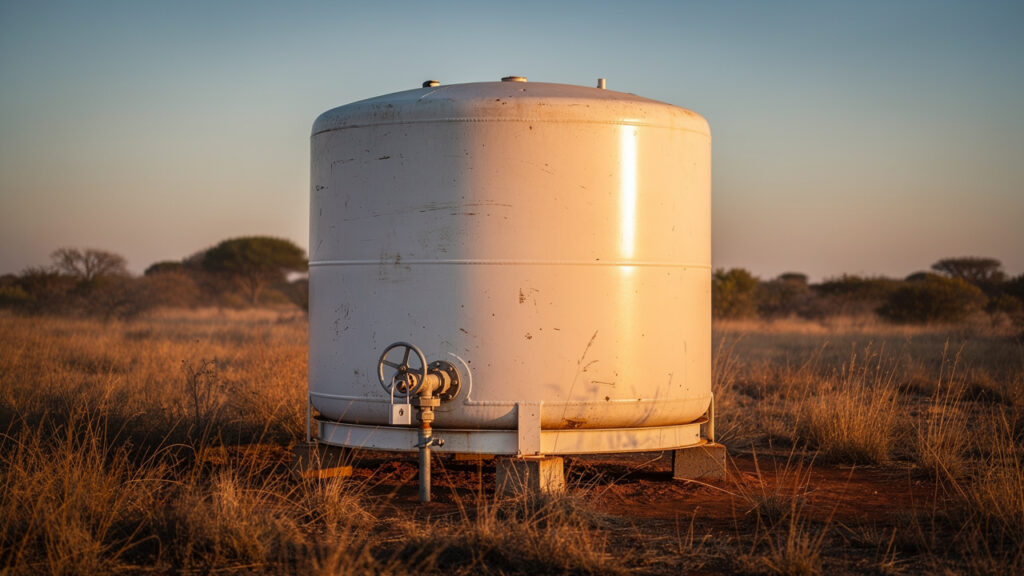
Every litre siphoned from a farm’s bulk diesel tank costs more than ever. Inland wholesale diesel sits at R30.85 per litre this November, with coastal buyers paying R29.98. The temporary R3 per litre fuel levy cut also shrinks to R1.50 from 2 December 2026, pushing pump prices higher still.
For farm owners managing on-site storage, preventing diesel theft in South Africa means closing the gap between what leaves the tank and what the paperwork shows. This article explains how theft happens on farms, the signs to watch for, and how tools like Digit D-Bulk and Digit D-Fuel from Digit 247 FMS help measure fuel at the source instead of guessing at losses later.
Key takeaways
- Diesel theft on farms is usually gradual, built from small amounts taken again and again rather than one dramatic incident.
- Paper-based reconciliation and month-end stock-takes always catch theft too late to recover the fuel or identify who took it.
- Measuring fuel directly at the tank, rather than trusting logbooks or fuel cards, is the only reliable way to close the gap.
- RFID or Bluetooth pump access and delivery-slip matching remove the common loopholes that let unauthorised fills and short deliveries go unnoticed.
- Real-time alerts turn a suspicion into documented evidence, with the time, location and litres lost recorded automatically.
Why is diesel theft such a big risk on South African farms?
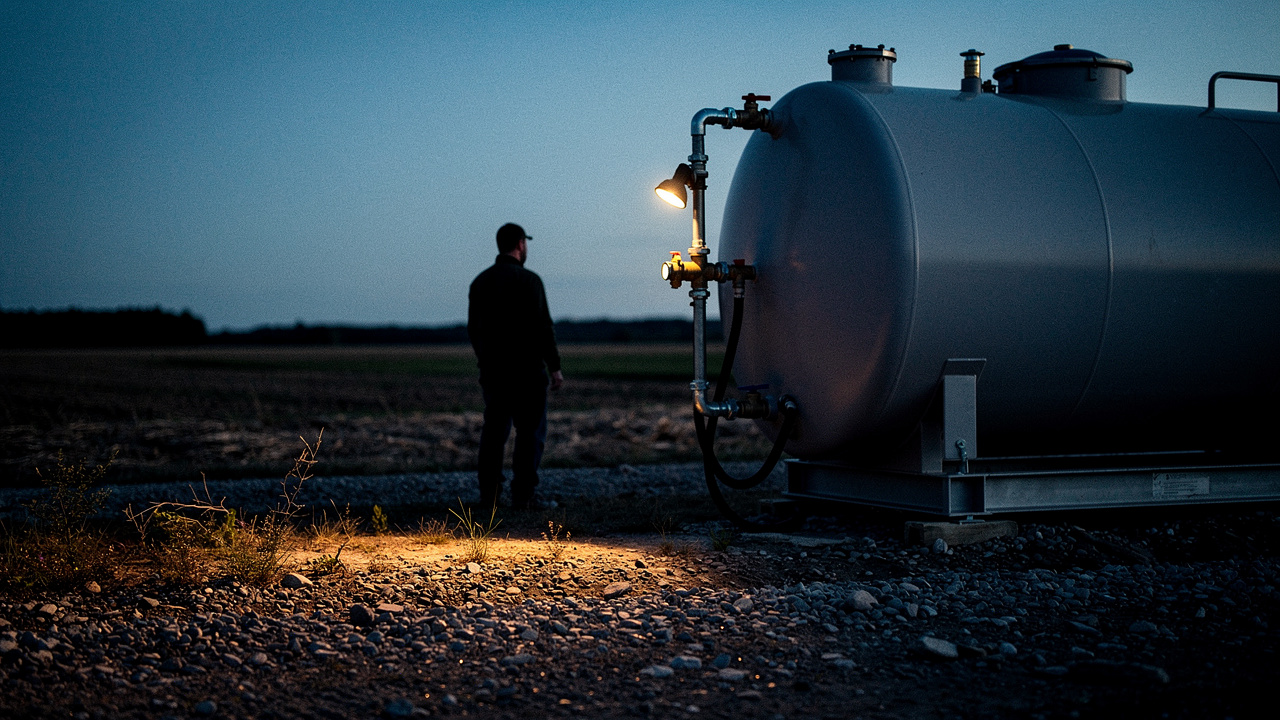
Diesel theft is a serious risk on South African farms because bulk tanks usually sit in remote locations with little or no oversight after dark. A tank holding several thousand litres rarely has anyone watching it overnight, and a fence or gate does little to stop someone who already works on the property and knows where the tank is kept. Unlike a forecourt or a transport depot, most farms have no second person checking what leaves the tank each day, so a shortfall can continue for weeks before anyone notices the pattern.
It is a national problem, not just a local one. TLU SA has warned that the illegal diesel trade in South Africa could be worth millions, if not billions, of rand a year, and has urged farmers to stay alert to suspicious activity on their properties.
Rising diesel prices make this exposure far more costly than it once was. At R30.85 a litre inland, even 20 litres taken each week adds up to about R32,000 a year (20 litres × 52 weeks × R30.85), from what looks like a minor leak. Spread across several bakkies, tractors and implements, these small, repeated losses quietly eat into margins that are already under pressure from input costs.
How does diesel theft actually happen on farms?
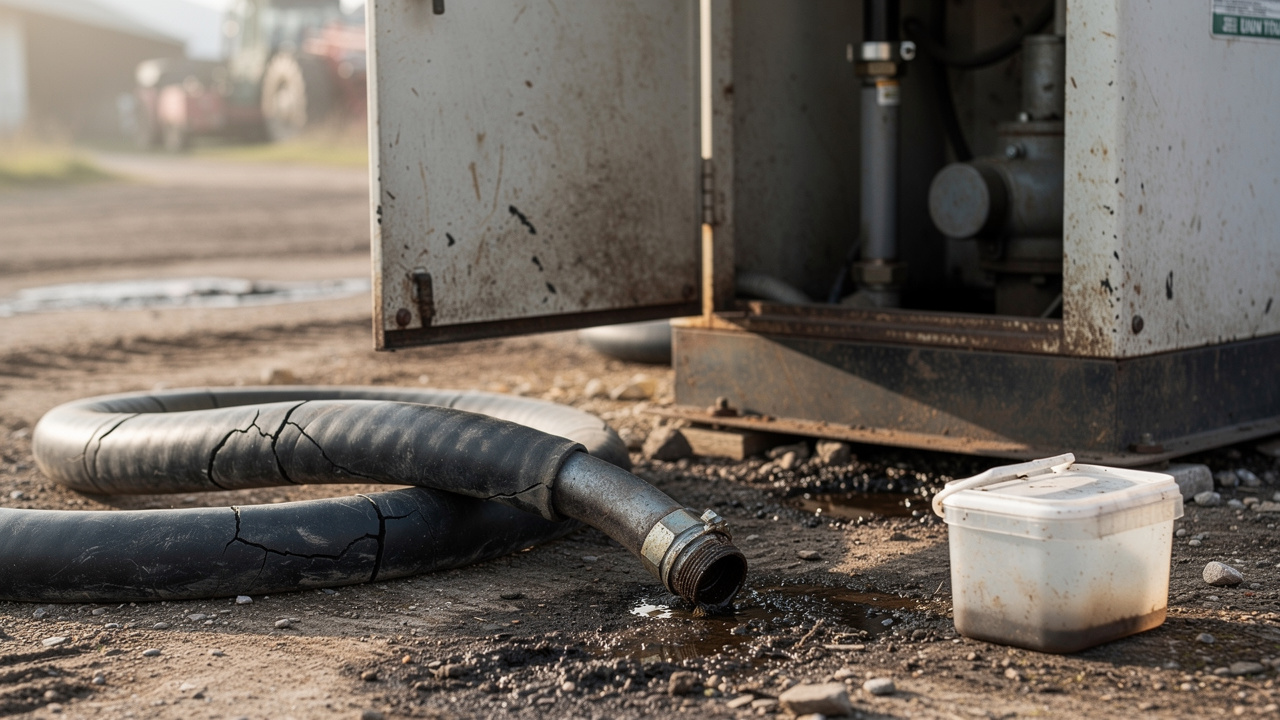
Diesel theft on farms happens mostly in small, repeated amounts taken by people who already have legitimate access to the tank or the vehicles using it. A worker siphons a few litres after hours, a delivery driver short-fills the tank against the slip, or fuel is moved from the bulk tank into a private vehicle or container at a quiet corner of the property. The following methods are the ones farm managers see most often.
- Siphoning after hours. Diesel is drawn off overnight or while equipment stands idle, in amounts small enough to look like normal daily consumption.
- Short-filling at delivery. The slip records one quantity, but the tank actually receives less, with the difference shared between a driver and an attendant.
- Ghost fills. Fuel appears to have been bought or dispensed on paper, yet it never reaches a farm vehicle or implement at all.
- Tank-to-tank transfers. Diesel is moved into another vehicle or a private container, often at a known blind spot away from the main yard.
Because each incident is small, these losses rarely look like a crime. They simply appear as a tractor or bakkie that always seems to use “a bit more” diesel than it should.
What warning signs show your bulk tank is being targeted?
A bulk tank being targeted usually shows up in the numbers long before anyone sees a physical sign of tampering. Reconciliations that never quite balance, month after month, are one of the clearest indicators, as is fuel consumption that varies sharply between operators running the same tractor or route. Deliveries that don’t match what the supplier’s slip states, and refuelling that happens at odd hours or away from the usual schedule, are also worth flagging rather than dismissing as a clerical error.
Spreadsheets and manual logbooks are poor tools for catching these patterns early, because they only show what was recorded, not what the tank actually held at any given moment. By the time a logbook entry looks wrong, the diesel and the person responsible are both long gone. This delay is exactly why farms that rely purely on paper records tend to discover theft only after it has run for months.
How can you protect your bulk diesel tank from theft?
Protecting a bulk diesel tank starts with measuring fuel at the source rather than trusting logbooks, fuel cards or a driver’s word for how much was used. A system that records the real level in the tank, ties every dispense to a specific vehicle and operator, and checks deliveries against supplier slips removes most of the guesswork that lets theft continue unnoticed. The strongest setup combines this kind of electronic monitoring with physical hardware on the tank itself, so that the two approaches cover each other’s weak points.
Monitor bulk tank levels with Digit D-Bulk
Digit D-Bulk, from Digit 247 FMS, measures what is actually in a farm’s storage tank rather than what paperwork claims should be there. It tracks levels with accuracy of up to 98%, automatically matches every delivery to its delivery slip, and logs exactly how much diesel each vehicle or implement draws from the pump using RFID or Bluetooth identification. Only an authorised, tagged vehicle can dispense fuel, which closes off one of the most common routes for unrecorded withdrawals.
The system sends real-time alerts for low levels, unauthorised access attempts and unusual consumption patterns. Farm managers can check tank status, dispensing history and recent alerts from a web-based dashboard on a computer or phone, wherever they happen to be on the property.
Add physical security barriers to your tank and fittings
Physical hardware gives a tank an added layer of resistance that works alongside electronic monitoring rather than instead of it. Here’s what helps most:
- Anti-siphon devices block the simplest method of draining a tank by hose.
- Lockable fuel caps restrict casual access to the filler opening altogether.
- Tamper-proof drain plug protectors add resistance around fittings that thieves target most often when a tank is left unattended overnight.
- Sender unit covers protect the components that monitoring systems rely on for accurate readings.
These barriers slow a determined thief down and discourage casual opportunists, but they rarely stop someone with time, tools and inside knowledge of the property. That’s why physical security works best as a supporting measure, with electronic monitoring in place to catch whatever still gets through. A farm diesel tank security built on both layers is far harder to defeat than either on its own.
Should you monitor individual vehicles as well as the bulk tank?
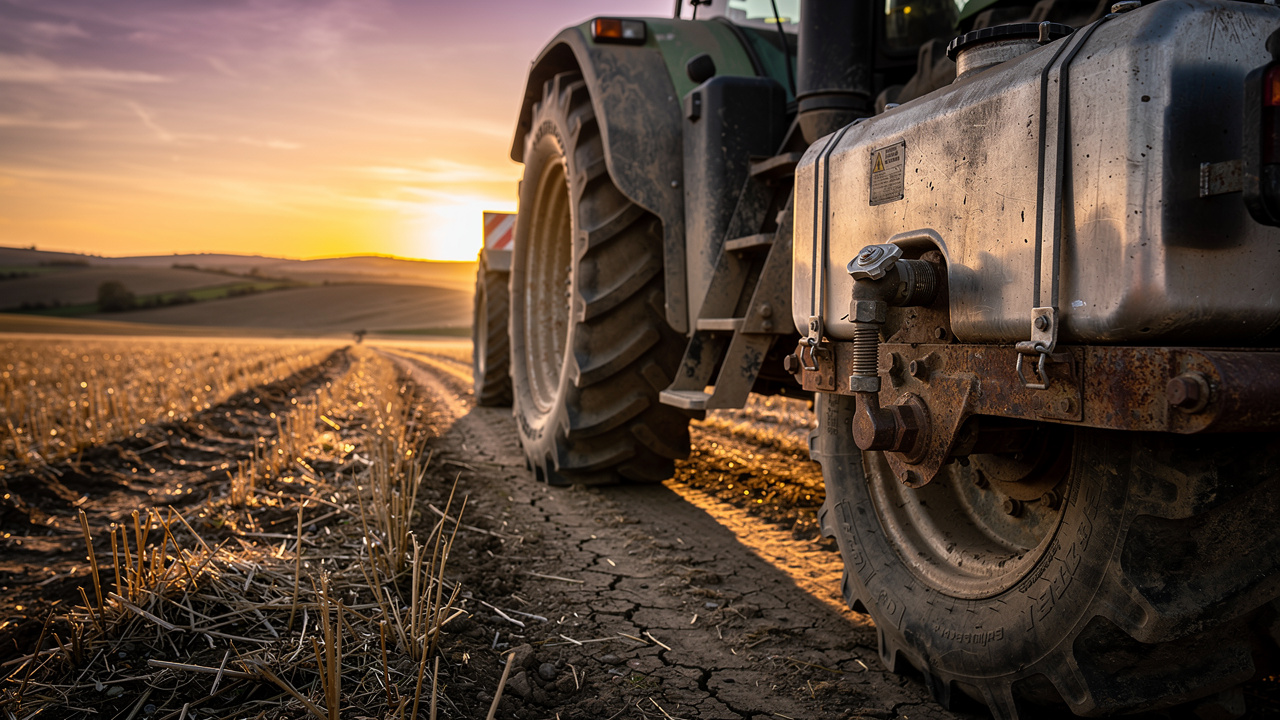
Yes, individual vehicles need their own fuel monitoring because bulk tank security only protects diesel up to the point it leaves the pump. Once fuel is dispensed into a tractor, bakkie or truck, siphoning from that vehicle’s own tank becomes a separate risk that a bulk monitoring system simply cannot see. A farm that secures its storage tank but ignores its rolling stock is still exposed to losses that happen away from the yard, often overnight at a field edge or while equipment stands parked between jobs.
Digit D-Fuel addresses this gap with a sensor in the vehicle’s tank that measures true litres in up to three tanks per vehicle, rather than relying on dashboard estimates. It sends instant theft alerts with the time and location of the drop, keeps a refuelling log for every fill, and produces consumption reports in litres per kilometre and litres per hour so unusual patterns stand out quickly.
What return can farms expect from fuel monitoring?

Farms investing in fuel monitoring can usually see the return quickly, because the system shows exactly how much diesel was going missing. To put the numbers in perspective, here is what different levels of unexplained loss cost a farm that uses 5,000 litres of diesel a month, at November 2026 inland prices (R30.85 a litre).
Diesel l
The takeawayDiesel theft on a farm is a measurement problem, not a mystery that needs solving through trust or guesswork. Farms that still rely on logbooks, fuel cards and month-end stock-takes will keep losing diesel to people who understand exactly how those paper systems fail to catch them in time. The fix is to measure fuel where it actually matters, at the bulk tank and every vehicle that draws from it. Reviewing your current tank security against the gaps covered in this article is a sensible starting point, and a combined approach using Digit D-Bulk and Digit D-Fuel gives farms visibility at both levels. Contact Digit 247 FMS for a consultation on securing your bulk tank and fleet against diesel theft. Frequently asked questionsHow much diesel do farms typically lose to theft each year?Losses are hard to quantify without proper measurement, since small amounts taken repeatedly tend to hide inside what looks like normal consumption. Most farms only discover the real figure once a monitoring system is installed and actual tank levels are compared against what records previously assumed. Can diesel theft happen even when the farm has security guards or fencing?Yes, because most diesel theft is carried out by people who already have legitimate access to the tank or vehicles. Fencing and guards help against outside intruders, but they do little to stop short-filling, ghost fills or insider siphoning carried out by staff or delivery drivers. How long does it take to install a bulk tank monitoring system?It depends on your tank, pump and site layout. Contact us for a site assessment and we will give you a realistic installation plan and timeline. Does bulk tank monitoring work if the farm has no reliable internet connection?The system sends readings and alerts over the cellular network rather than needing a fixed internet line at the tank. Signal at remote tank sites varies, so we check coverage as part of the site assessment. What happens when the system detects a theft event?The system sends a real-time alert showing the time, location and litres involved in the drop. This gives the farm manager enough information to respond straight away, rather than discovering the loss during a later reconciliation. Is bulk tank monitoring only useful for large farms?No, any farm storing diesel in bulk can benefit, since losses scale with tank size and usage rather than farm size alone. A smaller operation with a single tank and a handful of vehicles is just as exposed to siphoning and short-filling as a much larger one. Sources

|
|---|