
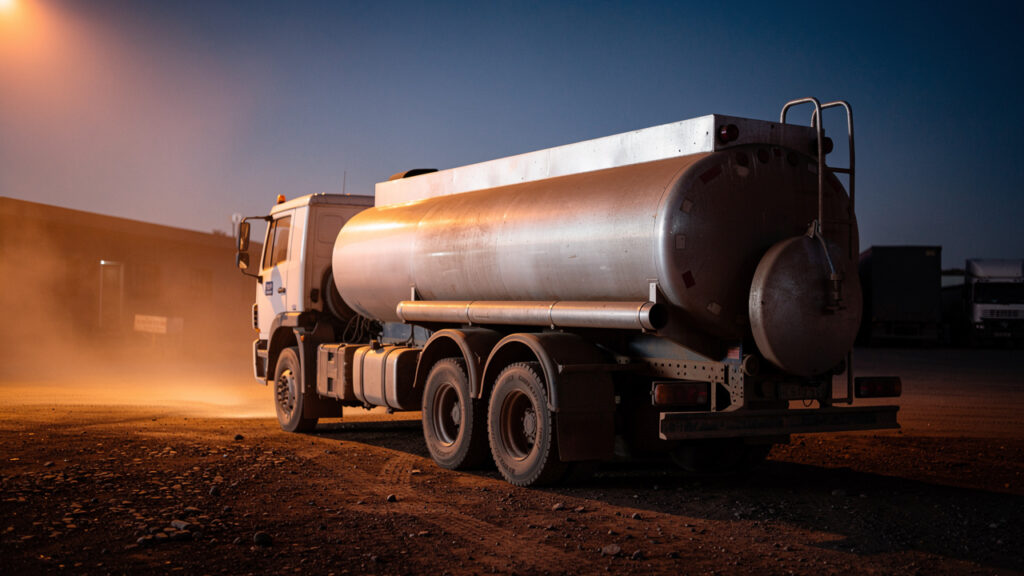
Diesel now costs R30.85 a litre inland and R29.98 at the coast as of November 2026. A temporary fuel levy cut drops further, to R1.50 a litre, from 2 December 2026. At these prices, a driver siphoning off just 50 litres a week quietly costs your business about R6,700 a month (roughly 217 litres a month at R30.85). Detecting fuel siphoning in trucks means watching for sharp tank drops with the engine off, fuel card purchases that don’t match GPS data, and buying patterns that don’t reconcile with what engines burn. This guide covers seven practical warning signs South African fleet owners, farm managers and site supervisors can check right now.
Digit 247 FMS, a South African fleet and fuel management company, builds tools for this exact problem, including Digit D-Fuel for in-vehicle monitoring and Digit D-Bulk for bowsers and bulk tanks. Read on for each sign, how to rule out a mechanical fault first, and the evidence trail you need before acting.
Key takeaways
- A sharp tank-level drop with the ignition off and the truck stationary is the single clearest sign of fuel siphoning.
- Fill-versus-burn reconciliation, comparing litres bought against litres the engine burns, catches theft without buying any new hardware.
- Tank sensors add speed and precision, but they only become proof when paired with GPS and ignition data.
- Always rule out a fuel leak or mechanical fault before treating a loss as theft.
- Gather evidence fast, since camera footage, card disputes and witness memories all have a short shelf life.
1. A sharp fuel drop while the truck is parked with the engine off
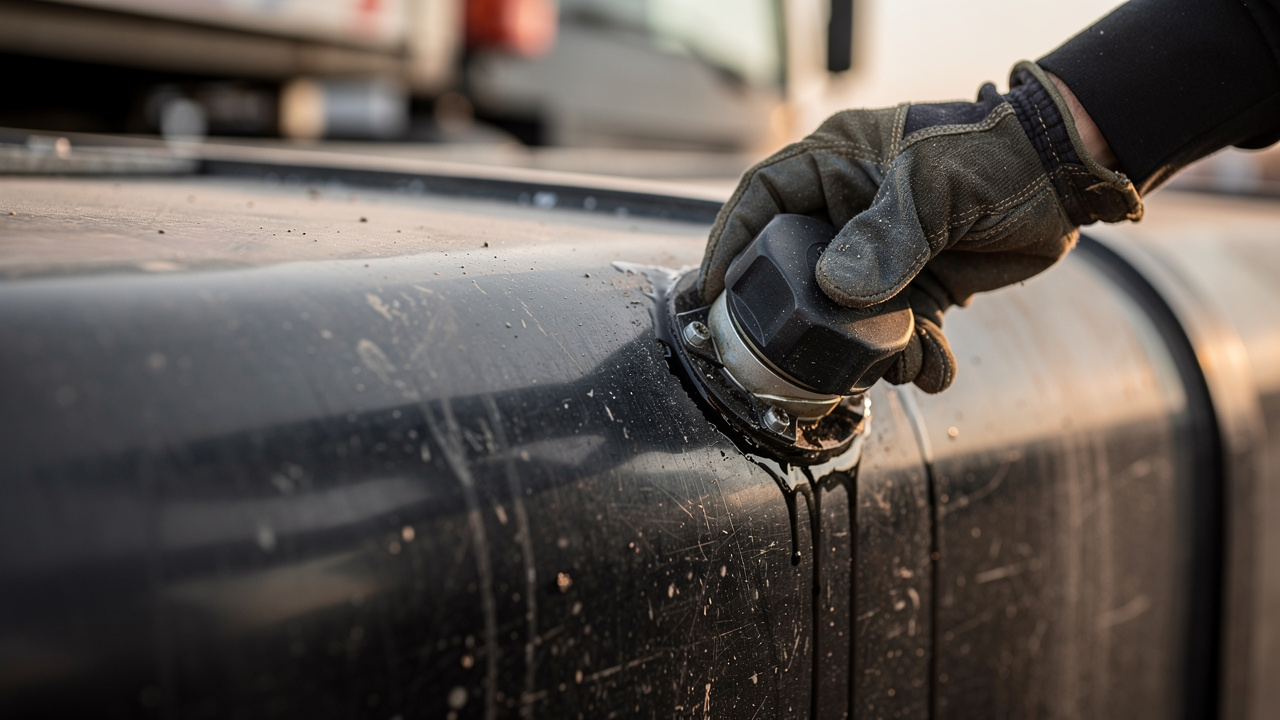
The clearest way to tell if truck drivers are siphoning diesel in South Africa is a fuel level that falls sharply while the vehicle sits parked with the ignition off. No engine running and no movement means no fuel should be leaving the tank at all. When a sensor shows a steep drop under these conditions, it is the classic siphoning signature fleet managers should never ignore. This pattern alone is often strong enough to justify an immediate inspection.
This type of loss often happens overnight in an unguarded yard, or during long stops such as border delays and roadside breaks. Thieves target these windows because the vehicle sits still for hours while nobody is watching. Without a sensor flagging the exact time of the drop, losses like this are usually only noticed the next morning, if at all.
2. Fuel card used somewhere the truck isn’t

A fuel card transaction logged far from where the truck’s GPS shows it parked is a strong signal of fuel card fraud. Someone has either used the card without the vehicle present, or fuel bought for the truck has been diverted somewhere else. Cross-checking the card’s location against GPS position at the same timestamp exposes this mismatch quickly. A single occurrence might be an error, but repeated mismatches point to deliberate misuse.
This issue sits inside the wider problem of fuel card fraud across fleet operations, where fraudsters increasingly target commercial fuel cards and fuelling transactions, and cards get shared, borrowed or copied. Reviewing transaction location against tracking data weekly, rather than waiting for month-end statements, catches this early. Flag any driver whose card activity repeatedly falls outside the truck’s actual route.
3. A fill smaller than the receipt says it should be
A fill that raises the tank level by less than the litres on the receipt points to diverted fuel. Sometimes the receipt even records a quantity larger than the tank could physically hold at that point in time. This mismatch suggests fuel was paid for but never fully reached the vehicle.
Checking delivery slips and receipts against the litres actually dispensed should become a routine check rather than an occasional audit. Doing this consistently across every refuel closes one of the easiest gaps for diesel theft to slip through unnoticed.
4. Fuel purchases consistently outrunning fuel burned
Fuel purchases that regularly exceed what the engine reports burning signal that litres are leaving the system somewhere between the pump and the road. A single week showing this gap is usually just measurement noise between pump meters and engine data. A gap that keeps widening month after month on one vehicle, however, is a genuine pattern worth investigating.
Track this figure per vehicle and per driver rather than across the whole fleet, since averaging hides exactly the truck losing the most fuel. Isolating the pattern to one unit or one operator makes the next step, whether an inspection or a direct conversation, far more targeted and fair.
5. Rising fuel consumption per kilometre or hour
Fuel use climbing per kilometre or per hour can look like theft, but it often has an innocent cause. Excessive idling, a slow fuel leak, or a maintenance fault such as a failing injector can all push consumption figures up without a single litre being stolen. Treating this signal as proof before checking the vehicle risks an unfair accusation.
Always inspect the truck’s engine, fuel lines and idling habits before linking rising consumption to theft. Only once mechanical and behavioural causes are ruled out should this figure feed into a wider fuel siphoning investigation.
6. Fuel loss during downtime, stops or idle periods
Fuel disappearing while a truck sits idle away from the yard is one of the easiest losses to miss. Border delays, overnight layovers and long waits at construction or mining sites all give thieves hours of uninterrupted access to an unattended tank. Because the vehicle isn’t moving and the driver may be off-site, these losses often go unnoticed until the next fill-up.
Losses during these windows can be sizeable, sometimes far larger than opportunistic theft in a guarded yard. Continuous fuel level monitoring throughout a stop, not just at its start and end, is the only reliable way to catch this pattern of truck fuel theft.
7. Consumption that doesn’t reconcile with distance or route
The final sign isn’t something you notice at a glance, it’s something you calculate using a fill-versus-burn check. Take the litres bought from fuel card or tank records, subtract the litres the engine reports burning, then adjust for any change in tank level between the start and end of the period. What remains is the unexplained loss, and it’s this figure that should trigger a closer look when it keeps growing week after week.
| Item | Litres |
|---|---|
| Bought on fuel card | 310 |
| Burned, per engine data | 262 |
| Tank level change | +8 |
| Unexplained loss | 40 |
Rule out a leak before calling it theft
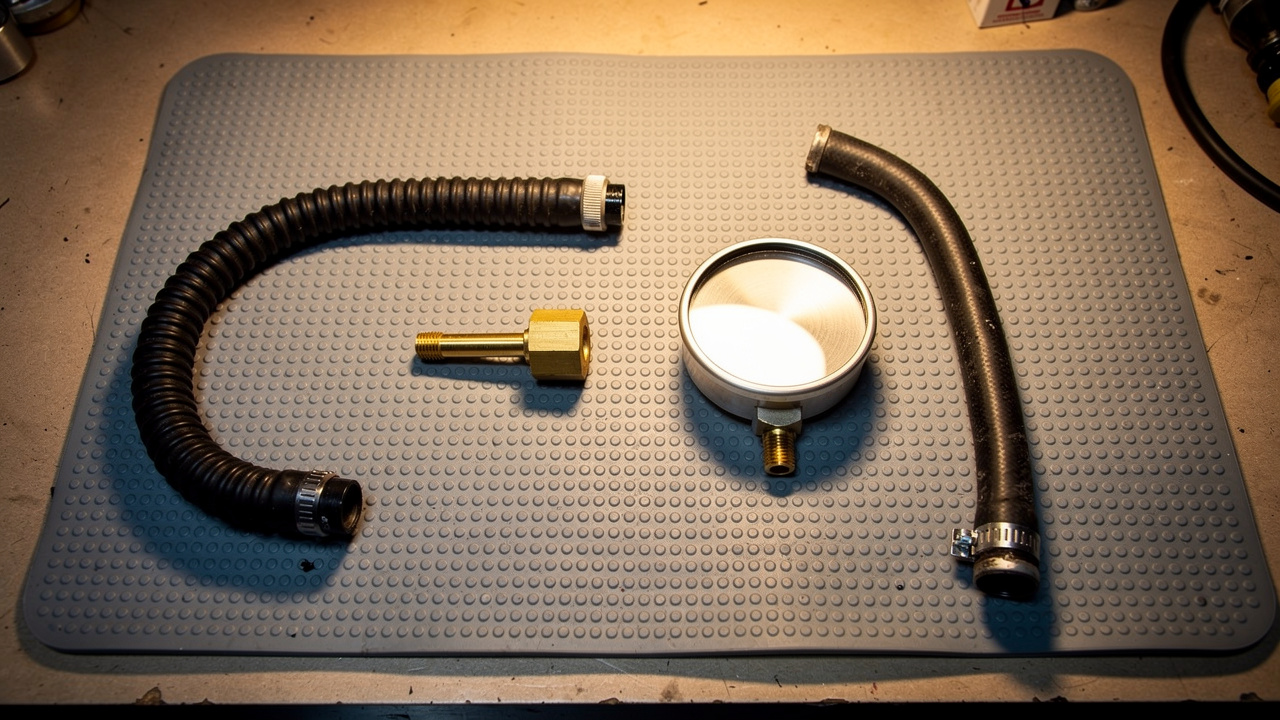
A weeping fuel line, a cracked tank or a stuck return valve can mimic slow siphoning almost exactly. Any vehicle showing a steady, unexplained loss should go for a mechanical inspection before anyone is accused of theft. Confirming the tank, lines and fittings are sound first protects honest drivers and keeps the real investigation focused on vehicles where theft is actually likely.
How Digit 247 FMS helps you catch and prove fuel siphoning
Digit 247 FMS turns these seven warning signs into real-time alerts instead of month-end surprises. As a truck fuel monitoring system, Digit D-Fuel uses a sensor inside the tank, measuring the actual level in litres and catching sudden drops or siphoning as they happen, rather than estimating from dashboard data. It sends instant theft alerts with the location and time of the loss, plus refuelling logs and consumption reports in litres per kilometre and litres per hour.
For yards running bowsers, Digit D-Bulk monitors bulk tanks with up to 98% accuracy, matching deliveries against slips and tracking dispensing per vehicle. RFID and Bluetooth identification at the pump confirms who filled which truck, while alerts flag low levels, unauthorised access or unusual consumption before they turn into a pattern.
Building an evidence trail you can act on
Suspicion alone won’t hold up in a disciplinary hearing, a police case or an insurance claim, so every incident needs a proper record. Collect the time-stamped tank reading before and after the loss, GPS location and ignition state at the time, and the day’s fuel card transactions for that vehicle. Note who was assigned the truck and who held the keys, and photograph any damage to the cap, lock or tank.
Speed matters here, because camera footage is often overwritten within days and card disputes carry strict time limits. Pull yard or vehicle footage immediately, and file a police report number as soon as theft is confirmed. These steps form the backbone of real diesel theft prevention for fleets, not just a reaction after the fact.
The takeaway
No single sign proves a driver is siphoning diesel. A sharp drop while parked, a mismatched fuel card transaction, a short fill, or purchases that outpace what the engine burns are each a lead on their own. Two or more of these signs appearing together on the same truck or driver is what turns suspicion into a pattern worth acting on. Ruling out leaks and mechanical faults first keeps the process fair and the evidence solid.
With diesel sitting above R30 a litre inland, waiting for month-end reconciliation to reveal theft is an expensive habit to keep. Putting monitoring in place now, whether through manual fill-versus-burn checks or a system like Digit 247 FMS, means losses show up the next morning instead of the next quarter.
Frequently asked questions
Do I need a fuel tank sensor to start detecting siphoning?
No, not to begin. A fill-versus-burn check using your existing fuel card records and engine fuel-used data can reveal losses over a week or a month without buying anything new. A sensor such as Digit D-Fuel sensor adds speed and precision, pinpointing exactly when and where a loss happened.
Does insurance cover stolen diesel?
It depends on your policy. Check the wording with your broker, as some policies treat stolen fuel differently from damage to the tank, cap or lock, and keep time-stamped tank and GPS records, since they may be your only route to recovering any value.
How do thieves actually siphon fuel from a truck?
Common methods include:
- Lowering a hose into a fairly full tank and using gravity
- Using a second tube with air pressure on lower tanks
- Exploiting filler necks that lack an anti-siphon screen, making a hose easy to insert
Understanding these methods helps you choose locking caps and screens that make draining a truck harder.
How much can fuel theft actually cost a fleet?
It can be far more than most owners expect. Freight News reported a case where 24 of 27 drivers in one fleet gave sworn confessions to having 25 to 50 litres of diesel siphoned off on every trip to Johannesburg. At R30.85 a litre inland, 40 litres a trip is about R1,234, which comes to over R128,000 a year for one truck doing two trips a week.